These are the releases in Dolby Atmos spatial audio you can look out for this week. Links will take you directly to Apple Music, log in there for a seamless listening experience. Friday is the usual release day on streaming services, so set aside some time for listening on September 11!
See our Release Reel for September 11 for a behind-the-scenes playlist with more background for some of these new releases.
See our AudioDaily Atmos 100 playlist for quick access to all the best of recent releases in spatial audio.

Lise Davidsen (sop.), London Philharmonic Orchestra, Edward Gardner (cond.) — Verdi (Decca Classics, 2026). Lise Davidsen built her huge following on the strength of a powerful Wagnerian voice and big, demanding roles in Wagner and Strauss operas. 2026 is marking out a sharp turn in a new direction: first came her best-selling Live at the Met album, where intimate songs rubbed shoulders with operetta, Broadway and a handful of grand arias; and now she plants herself firmly in Verdi. This album comes on the heels of stage roles as Elisabeth in Don Carlo and Leonora in La forza del destino, and just days before opening the NY Met season as Lady Macbeth. Verdi indeed!

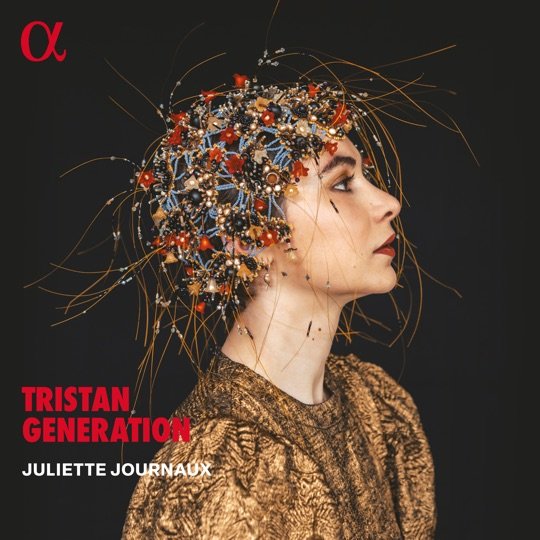
Juliette Journaux (piano) — Tristan Generation (Alpha Classics, 2026). Journaux taps into her enthusiasms as both a vocal coach and a pianist, on a mission to bring opera and lieder to a wider audience through imaginative programs built around her own piano transcriptions. Arias and songs, without the singers. Journaux’s selections and arrangements are more a reflection of the chill crossover tastes of our own time, rather than the glittering paraphrases of Liszt and his contemporaries. In 2023, she explored the world of Schubert in Wanderer, and in this followup album she follows Wagner’s Tristan into the 20th century.

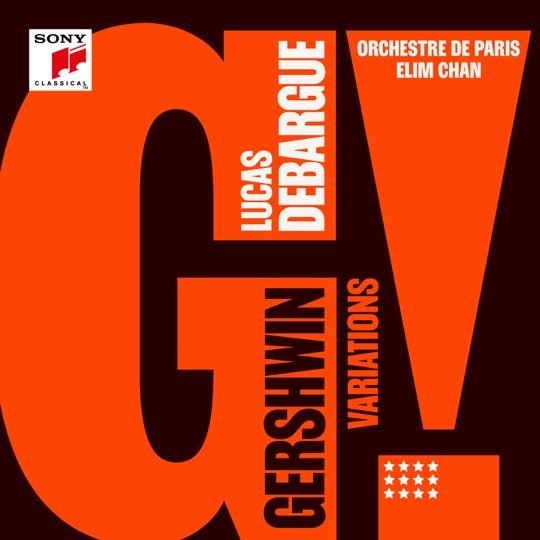
Lucas Debargue (piano) — Gershwin Variations (Sony Classical, 2026). This is an ambitious continuation of Debargue’s recent preoccupation with deep dives into solo piano repertoire of single composers (Scarlatti in 2019, Fauré in 2024). His Gershwin album pairs a full album’s worth of Gershwin proper (the Piano Concerto with Orchestre de Paris, and a fine selection of solo piano pieces, including a transcription of Rhapsody in Blue); and another album’s worth of Debargue’s own re-compositions of Gershwin songs, performed on a uniquely interesting modern instrument: Stephen Paulello’s SP/287, recorded in Paulello’s own studio in Paris.

Francesco Piemontesi (piano), Leipzig Gewandhaus Orchestra, Manfred Honeck (cond.) — Brahms: Piano Concerto No. 1 & Six Piano Pieces, Op. 118 (Pentatone, 2026). Piemontesi and Honeck provide the anticipated bookend to last year’s release of the Brahms Piano Concerto No. 2 plus the Op. 117 Intermezzi for piano solo. This sequel pairs Concerto No. 1 with the intimate late piano pieces of Op. 118. It’s amusing to recall that the same Gewandhaus orchestra performing here was also involved in this concerto’s notoriously disastrous second performance in 1859, with Brahms at the piano and the Leipzig audience hissing at what Brahms expected would be a brilliant success.

Laurence Equilbey (cond.), Insula Orchestra & Insula Camerata — Beethoven Extended: Symphony No. 7 (harmonia mundi, 2026). A clarification is in order: Equilbey and her ensembles already released Symphony No. 5 in this Beethoven Extended project in February this year, digital only. Today they release the Seventh Symphony in digital, as well as a physical CD of both symphonies. The spatial audio versions are only available via digital streaming. What is “extended” and “arranged by Laurence Equilbey”? It’s a (much) bigger orchestra, with a lot more string players, and Equilbey “arranges” to deploy the extras as a way of adding heft to parts of the scores. There is an audible difference, but whether there’s any point to it in the context of a modern recording? Not really.

Chanticleer — Machaut (Delos, 2026). Greatest hits, including Messe de Nostre Dame. Chanticleer returns to their roots with the kind of programme that has become surprisingly rare in their extensive catalog: an entire album devoted to a single medieval composer. Machaut makes a fine introduction to the great 14th-century master, you could even call it a greatest hits package. The sacred side of his work is represented by his great masterpiece the Messe de Nostre Dame; for the secular, earthly-love side, Chanticleer presents six shorter chansons and motets. San Francisco’s St. Ignatius Church, the familiar setting of Chanticleer’s celebrated Christmas concerts of recent years, should offer a pleasing ambience for Machaut, especially in Atmos spatial format.

Mishka Rushdie Momen (piano) — Hall of Mirrors (Hyperion, 2026). Rushdie Momen’s career continues picking up steam, with this second album of early-ish Baroque keyboard music for Hyperion, intelligently presented without apologies on modern piano. She moves on from Byrd’s England (Reformation, 2024) to the whirlwind concert scene at Louis XIV’s Versailles. The program is focused on two complete keyboard suites: Rameau’s Suite in E minor; and the little-known Suite No. 2 in G minor by Elisabeth Jacquet de La Guerre (the latter in its first modern recording on piano). A couple of sets of Couperin’s colourful character pieces complete the bill.

Justus Eichhorn (piano) — The Source (Deutsche Grammophon, 2026). Unless you are much younger than me, this will likely be your first acquaintance with 16-year-old Justus Eichhorn. He has developed a large following on social media, mostly on the strength of his “boyish good looks” and plausibly competent piano playing. I will put aside my envy to report that his debut album has some cred and potential, thanks to interesting programming. The theme is “Weimar” (his hometown), but the more interesting angle is that it traces a chain of transformations (source -> transformation): Bach rethinks Marcello; Liszt and Cortot rethink Schubert; Reger rethinks Strauss; and Eichhorn himself joins the party with his own arrangements and three original compositions. Proof will be in the listening.