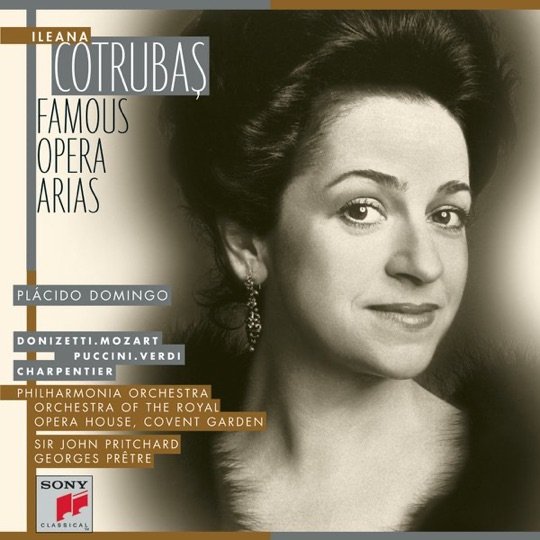
Carlos Kleiber conducts La Traviata (1978 live) [with Cotrubas, Aragall, Bruson et al.]
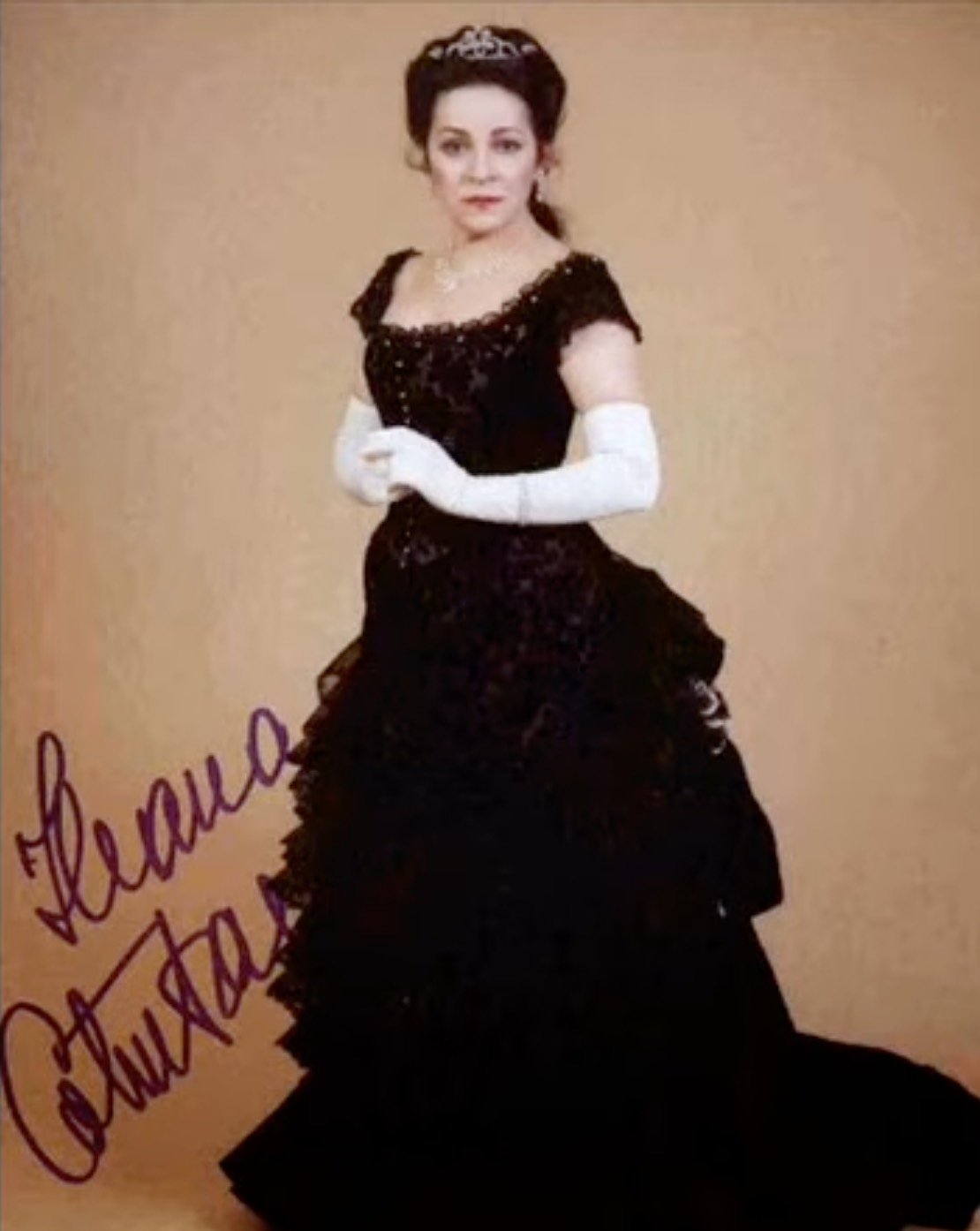
Not two months ago, I recalled the stellar career of Ileana Cotrubas in my review of her iconic performance as Violetta in Verdi’s La Traviata (Deutsche Grammophon’s Dolby Atmos remaster of the 1977 studio recording conducted by Carlos Kleiber). Today, as we learn with sadness of her passing at age 87 on August 20, I want to remember her with some indelible memories of great performances from her prime years in the 1970s and 1980s.
Start here with this live performance of Traviata in 1978. As in the studio production of the previous year, Kleiber is again conducting the Bavarian State Orchestra, but with a more everyday cast:
Cotrubas is Violetta, with Giacomo Aragall in place of Placido Domingo as Alfredo. Cotrubas performed this role often, at great opera houses the world over, in the wake of the hugely successful recording. The live performance gives us a subtly different Violetta, more volatile, more daring. Kleiber’s confident leadership still holds the drama in clear focus, but Cotrubas is freer to ride the danger and excitement of the moment.
Cotrubas was never about polished vocal display for its own sake. What mattered was the human emotion embodied in the musical line: Violetta talking herself into and out of hope; Mimì trying not to frighten Rodolfo. And Cotrubaș had an almost uncanny ability to let those thoughts register without turning them into acting-class underlining. Her voice could be silvery, tender, plaintive or suddenly urgent, but the deepest artistry was her insight into the the text and the drama.
Watch this scene from Puccini’s La Boheme, in Act I as she is getting to know Rodolfo at first acquaintance. The aria is an intimate self-revelation to a man she has just met. At first she keeps it simple and speech-like, letting little domestic details accumulate – embroidery, flowers, the first thaw. As her character gains courage and confidence, the voice gathers richness, she rises from her chair, and then strikes at your heart with the full glory of her vocal weight. Neil Shicoff is the (mostly silent) Rodolfo.
Puccini: La bohème “Sì, mi chiamano Mimì” – Royal Opera, 1982, Lamberto Gardelli
That clip is from John Copley’s Covent Garden production, filmed live for television in February 1982, issued commercially on VHS and LaserDisc in 1983, and eventually released on DVD in 2000. If you can believe it, I actually had a copy of the (huge!) LaserDisc back then, even though I never ended up getting a player for it. But that’s a whole other story.
Vienna was Cotrubas’s artistic home from 1969 onward. But Glyndebourne, Covent Garden, La Scala and the Metropolitan Opera all benefited regularly from her singular artistry, in a selective range of roles: Mozart, Verdi, Puccini, Debussy, Bizet and Massenet. Her 1975 La Scala Mimì – flown in on extremely short notice – and her 1977 Met debut in the same role, say something important about how colleagues and opera houses trusted her, not just to sing the notes, but to make the stage come alive.
Another of her great stage performances of this era was the 1973 Glyndebourne production of Mozart’s Marriage of Figaro, which brought her together with a strong and unique cast of sopranos. Cotrubas is Susanna (one of her most familiar roles), with Kiri Te Kanawa as the Countess, and Frederica von Stade as Cherubino. Here they are in Act II: Susanna and the Countess are preparing Cherubino for their scheme to expose the Count – they are going to disguise the young page as a woman. In the aria “Venite, inginocchiatevi,” Susanna takes charge of the makeover, ordering Cherubino to kneel while she fusses with his hair, clothes and posture, teasing him all the while as the Countess looks on.
Mozart: Le nozze di Figaro – Glyndebourne, 1973, John Pritchard (cond.)
Mozart’s sparkling comedy shows us another side of Cotrubas, rapid-fire parlando in the service of lively stagecraft. The Glyndebourne staging shows her off at full tilt, taking pleasure in the recitative as much as the set pieces. Listen to how quickly she changes weight and colour as the action grows more hectic and confusing. This is crackerjack ensemble opera, and a reminder that comedy was central to her art!
Ileana Cotrubas belonged to a rare class of singers who can transform the emotional temperature of a performance, sometimes before the orchestra has quite caught up with her. Her particular mixture of quick intelligence, delicacy and dramatic nerve made her one of the most important and beloved sopranos of her era. Have a listen to how her soaring soprano carries the emotional weight of this famous ensemble from Verdi’s Rigoletto.
Playing against Placido Domingo, Cornell MacNeil and Isola Jones, Cotrubas might have been drawn into a vocal shouting match, but she does the opposite. Her Gilda seems to retreat inward as the Duke’s seduction plays out in front of her, and the hurt registers without melodrama. Her avoidance of grandstanding, while still causing the music to soar, made her Gilda so poignant, and one of her familiar calling cards.
Cotrubas’s legacy isn’t a single perfect note, or a single famous Violetta. It was her ability to fuse great singing with convincing acting, to a degree that few great opera stars ever achieve. She could make fragility vivid, intelligence warm, and pathos un-sentimental. And she did it without ever treating the audience as if we needed the emotions explained to us.
Further ListeningBack to Top
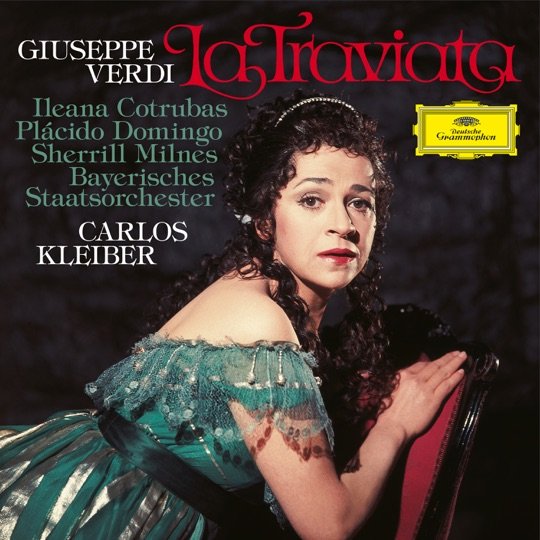
Ileana Cotrubas, Plácido Domingo, Sherrill Milnes, Carlos Kleiber — Verdi: La traviata (Deutsche Grammophon, 1977). I’ve already staked a claim on this one: a great studio recording that has been a constant companion since I bought it on LP in my early 20s. Kleiber’s nervous energy allows Cotrubas enough space to make Violetta’s fateful twists and turns feel believable rather than contrived. The 2024 Atmos remaster gives us a fresh reason to listen, but the magic is still in the terrifying progression from careless joie de vivre to a heartbreaking tragic end. Today, her final “Addio del passato” isn’t just Violetta’s farewell, it feels more like one final, painfully apt goodbye to Cotrubas herself.