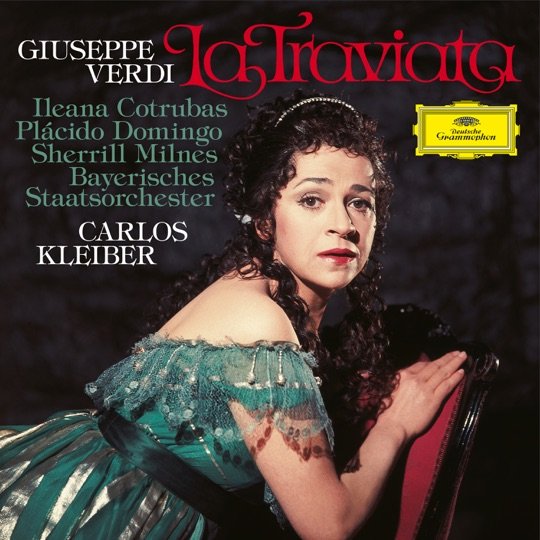

This was one of the first opera recordings I bought on LP in my early 20s, and it has been a constant go-to in its various repackagings and remasterings over the years. Along with Solti and Culshaw’s magnificent Ring Cycle of some 15 years earlier, it showed me how completely opera on record could take over a room. I have to tell you: it remains the best recorded performance of La traviata I know.
The headline today may be Deutsche Grammophon’s 2024 Dolby Atmos remaster, but that is not why this recording still matters.
When these artists went into their session to record this Traviata in 1976 (in a large Munich beer hall serving as makeshift studio, if you can believe it!), Kleiber was closely associated with the Bavarian State Opera. He knew its orchestra and chorus as close collaborators, not as partners of convenience for a recording project, and the performance thrives accordingly. As for Cotrubaș, she had already sung Violetta with Kleiber in Munich, and their shared understanding is audible in every glancing hesitation and overflowing release.
Nothing here feels routine in any way. Cotrubas brings the required brilliance to Violetta’s coloratura, though the top can turn wiry under pressure. But technical panache is never the point. From the outset, listen to her “Ah, fors’è lui” as she progresses from private astonishment into an almost frightened surrender; then hear “Sempre libera” become a frantic attempt to talk herself out of love, not a showy display of vocal agility. By the time “Addio del passato” rolls around in Act III, the voice sounds both ravaged and strangely luminous. Passion, frailty, vulnerability… Cotrubas navigates the roller coaster of raging emotions with deep insight into the role, but never to off-putting excess.
Kleiber supplies the pulse that makes those changes inevitable. He keeps the prelude poised on a thread, lets the party music glitter without turning brittle, and drives the Act II confrontations with taut, almost unbearable momentum. Placido Domingo’s Alfredo is ardent and secure, while Sherrill Milnes gives Germont patrician authority, though at their broadest both leading men can sound as if they have wandered in from one of Verdi’s more heroic operas. But Kleiber keeps them on their toes, and their vocal solidity gives Cotrubaș something to play off of: resisting, suffering and finally forgiving.
The 2024 Atmos presentation, prepared for Apple Music Classical and DG’s big Carlos Kleiber Complete Recordings box, opens up the recorded acoustic without turning it soupy. Tonally it is warm and slightly soft-edged, with voices held front and centre while the orchestra spreads beneath and behind them rather than flattening into a narrow strip. The balance remains first-class, dynamics have plenty of edge, and the low strings and timpani gain useful depth, while the chorus sits farther back in a believable stage picture. The Atmos surround effects bring air and spaciousness, rather than floating the singers off into space.
If you are a stereo die-hard, this remaster also brings some mild improvements in that format, and Qobuz offers the 24/96 stereo version with a useful digital booklet. If you want physical media to have and to hold, DG’s complete Kleiber box includes all the formats your heart could desire on two Atmos discs, alongside the CDs.
Choose your format – I’m fine with streaming via Apple Music Classical and Stage+ – and DG has you covered. This is an essential library piece, highly recommended.
Favorite MomentBack to Top
Go to Act II, “Ah! Dite alla giovine,” around 0:35, where Cotrubaș begins to accept the sacrifice Germont demands. She draws the voice inward until “sì pura e bella” seems almost too private to survive being heard, then lets a tremor pass through the line without breaking its shape. That tiny withdrawal is devastating!
Further ListeningBack to Top
Verdi: La Traviata – Angela Gheorghiu (Decca, 1995). Gheorghiu and Georg Solti bring glamour, plush vocal colour and a more overtly theatrical sweep, although the live performance audio leaves much to be desired. This Violetta is less vulnerable than Cotrubas, but her performance shows how seduction and star presence can carry the tragedy by a completely different route.
Verdi: La Traviata – Lisette Oropesa (Pentatone, 2022). Oropesa, Daniel Oren and the Dresden Philharmonic offer modern clarity, complete text and polished sonics. It is a fascinating contrast in temperament: poised and beautifully finished where Kleiber and Cotrubas seem to discover the danger one phrase at a time.