The regular Naxos newsletter turned up in my email box the other day, and told me that July 31 is Uncommon Instrument Awareness Day. It has been so declared for at least the last 15 years, I gather. Who knew? (well, Naxos, obviously).
So let’s have a little explore today. My contribution here will be the first three examples of uncommon instrument usage that come to mind, stream of consciousness style.
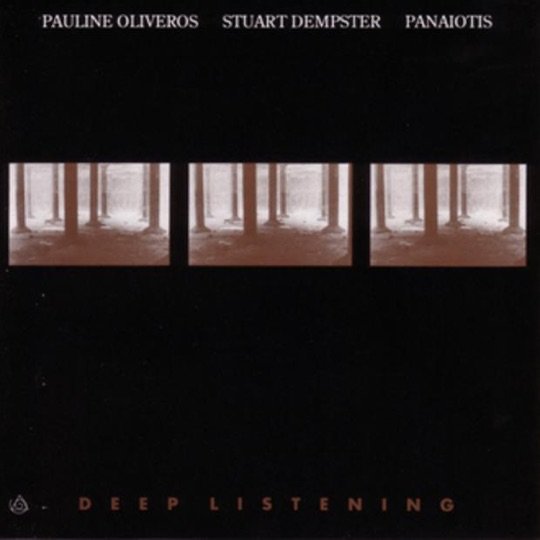
Pauline Oliveros, Stuart Dempster, Panaiotis – Deep Listening (New Albion, 1988)
Pauline Oliveros (1932-2016) was an inventive and highly influential composer of uncommon emotional depth, and she often used uncommon instruments in her work. Deep Listening (1988) is one of her most striking pieces: an album project in four movements, composed and improvised collaboratively with Dempster and Panaiotis. It’s also the term she later applied to a whole genre of music she developed, following the lead of this project. You might say it’s related to minimalism or ambient music, but the concept is quite the opposite. The sustained tones of Deep Listening invite the audience to pay close attention to the smallest details: Oliveros’s trademark accordion may come to resemble an organ or synthesizer; a garden hose may appear to be a distant ceremonial horn. The performance is recorded in an underground cistern in Port Townsend, Washington, and the Oliveros ensemble essentially “plays the room,” which has a unique acoustic with a 45-second reverberation time. Listen deeply, and you will hear conch shells, didgeridoo, found metals, pipes, a garden hose, whistles, and a brass mouthpiece, alongside the accordion, trombone, and voices.
Justin Taylor – Chopin Intime (Alpha Classics 2025)
Justin Taylor is best known as a harpsichord player and a Baroque specialist. But for his 2025 album Chopin Intime, he goes Romantic… and he does it with the ear and instincts of a historical performance practice devotee. He recorded these familiar Chopin pieces on the very instrument the composer used to compose them, while he was living with George Sand in Majorca in 1838. Not a piano, but a smaller, delicate-sounding little brother of the piano, the Pleyel Pianino. Justin tells us: “It is a small upright piano, six-and-a-half octaves in range, with a wooden frame, and thanks to its dampers – quite small in size – it has an extremely beautiful natural resonance. In the upper register it has a rather veiled, velvety sound – Liszt spoke of it as ‘silvery’ ” These instruments were made for musicians who traveled, only from 1835 to 1842, apparently. So yes, it is an uncommon instrument, and you can appreciate it today!
Regina Bastarda, Paulo Pandolfo (Glossa, 2019)
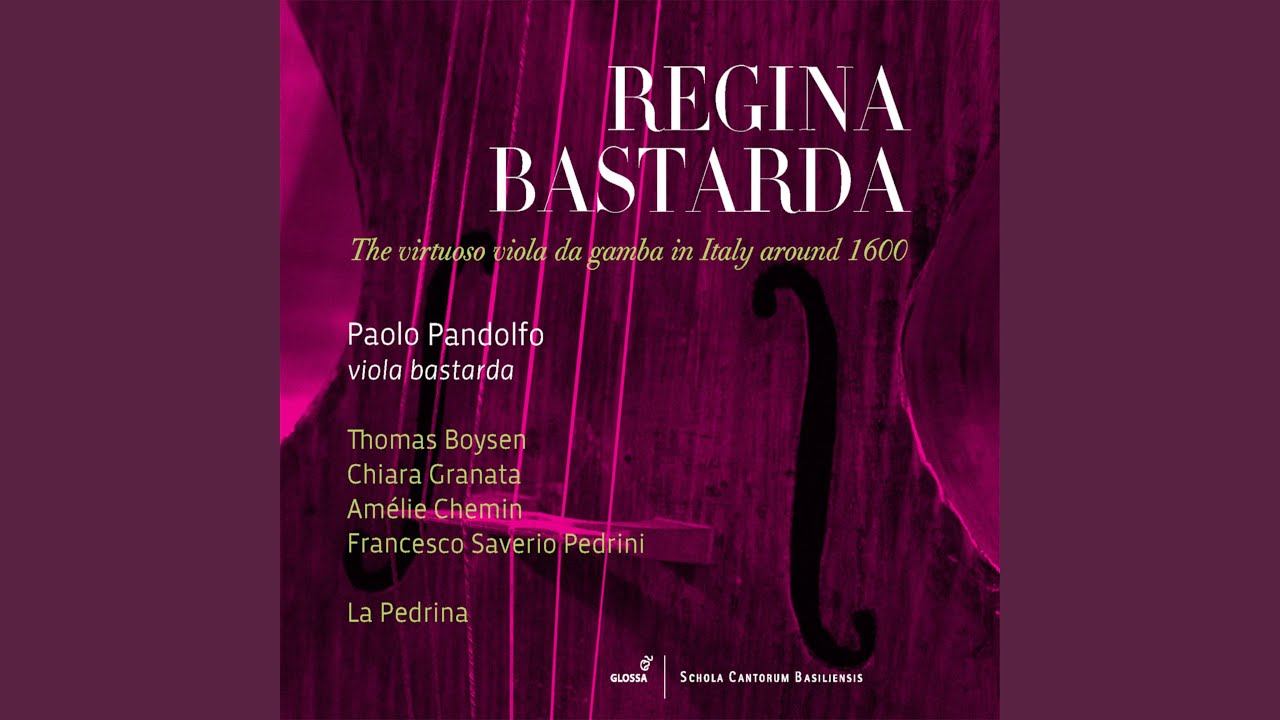
Paulo Pandolfo: Regina Bastarda (Glossa, 2019) – Virgiliano: Ricercar No. 2. I admit I came up with this selection because the instrument name is just so darned memorable: the 17th-century viola bastarda. I’ve heard recordings of this variation on the Baroque viola da gamba (ancestor of the modern cello) a few times, almost always performed by Paolo Pandolfo – a specialist’s specialist if there ever was one. As I understand it, the name of the instrument derives from its “in between” status: on one side the bass viol, on the other side the viola da gamba. So a “bastard” of sorts? Anyway, the bastarda had greater range, and lighter strings that facilitated extreme virtuoso agility. I get the impression it is also much harder to play. Several of the selections on this Glossa album find Paolo Pandolfo practically on fire, his fingers are flying so hard. Yet another reason why an instrument may become uncommon.