Friday release day this week (August 28) brings a bumper crop of significant new releases, I guess this is the start of a buildup towards the Christmas shopping season. The blockbuster movies won’t be far behind. Here is a look behind the scenes at the artists and recordings we can look forward to in full on Friday. See the complete line-up on our Atmos This Week post.
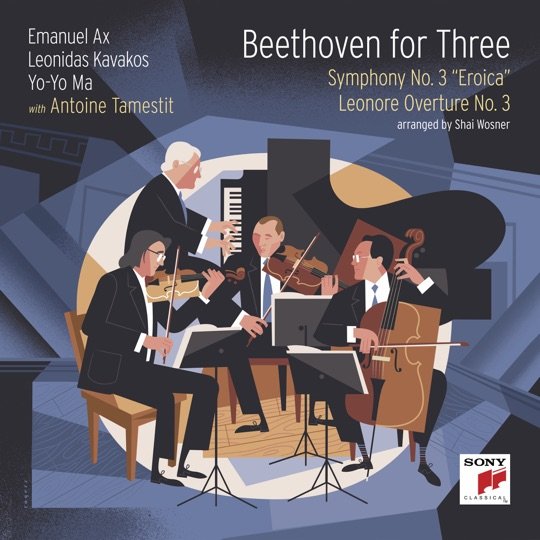
First up, here is the Beethoven For Three ensemble, which consists of super-stars Leonidas Kavakos on violin, Yo-Yo Ma on cello, and Emanuel Ax, piano. They have been performing and recording their fresh takes on Beethoven’s greatest hits under the banner of Beethoven For Three since they appeared at Tanglewood Festival in 2021, performing Beethoven’s Second Symphony in a piano-trio arrangement. They recorded Symphonies Nos. 2 and 5 immediately afterward, for their first album release on Sony Classical in 2022. Their new release this week is their fifth Beethoven for Three album. Given their high-flying career committments, the group doesn’t get out much together. Here’s a rare video clip of the trio live, from the Verbier Festival in 2023: Beethoven’s Piano Trio in B flat major, Op. 97 No. 7, “Archduke“. This was originally streamed by Medici.tv, but it is no longer available there… just this excerpt from the fourth movement, Allegro moderato, remains online.
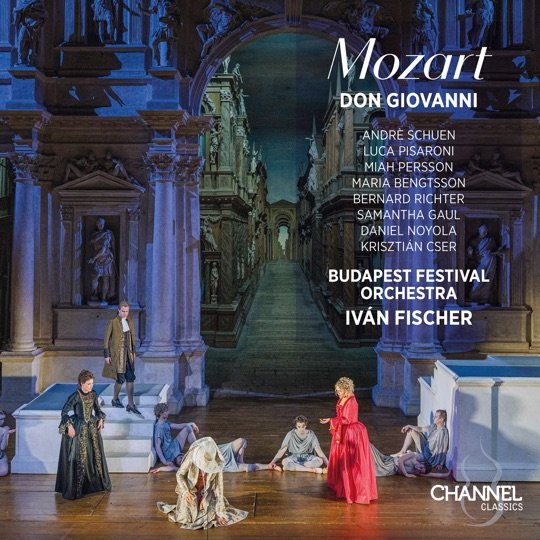
It’s good to see a top-drawer complete opera release this week, they are becoming scarce as costs soar. Ivan Fischer leads the Budapest Festival Orchestra and a stellar cast in what shapes up as the finest (amongst a field of one) natively Atmos recording of Don Giovanni. Here is a familiar excerpt from the last act of the live production last year at Vicenza Opera that brought this production together.
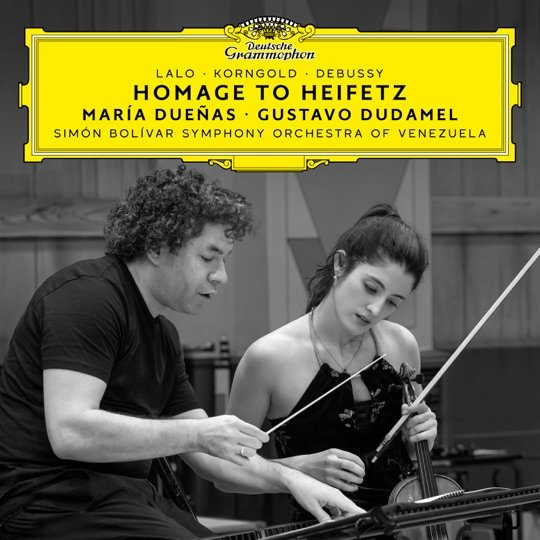
The most anticipated release of the week is undoubtedly Maria Duenas’ latest on Deutsche Grammophon, supported in the orchestral selections by Gustavo Dudamel and the Simon Bolivar Orchestra of Venezuela: “Homage to Heifetz.” The theme of works associated with Heifetz gives her great scope for some exciting and crowd-pleasing performances. Here’s a good sample of what to expect, from the recording sessions.
This is one of our finest flute players of the moment, Anna Besson playing with her Belgian ensemble A Nocte Temporis: Mozart’s complete Flute Quartets. You will see this group appearing in recordings ranging from small chamber ensemble like this, or scaled up to a full Baroque orchestra as the repertoire demands. A Nocte Temporis is a flexible period-instrument collective, co-founded in 2016 by Besson and tenor Reinoud Van Mechelen.
Carmen Stefanescu is a Romanian-born, Cologne-based pianist whose career has taken an unusual route. At age ten, she was a junior student at the Aachen conservatory, but she left formal classical training at eighteen to pursue a caree as a rock and pop keyboardist and studio musician; then returned to complete her serious piano studies, with honours, in Cologne. That background explains her ease with programmes that cross conventional boundaries. On this all-things-water themed album, she goes as far afield as the world of video games, with Nobuo Uematsu’s The Boundless Ocean. But here is something a little more mainstream, albeit a newly discovered composer for many listeners: Mel Bonis was a fellow Paris Conservatoire student with Debussy, and developed a colorful music vocabulary poised between late-Romantic lyricism and the emerging Impressionist world… despite the conventions that kept women composers at its margins.
There are several intriguing new music releases this week as well. Floating Points and the San Francisco Ballet Orchestra come on strong with their 2024 ballet “Mere Mortals.” [CAUTION: this selection is much louder than everything else on this page]. Their official video presentations of a couple of tracks make me think I’m back in the 1960s at the Fillmore West auditorium in San Francisco with a liquid-light show pulsating overhead. Or is that just a flashback? Come to think of it, I’m going to a concert involving Jefferson Starship this weekend…
What would a big week of new releases be without a solid period-instrument recording? This one isn’t the usual Baroque fare, instead we have Mahler’s Symphony No. 5 performed on period instruments by the Mahler Academy Orchestra, conducted by Philipp von Steinaecker. For this occasion, the orchestra plays with gut strings and antique wind and brass instruments made around 1900. The point is not antiquarian novelty: Mahler pushed the rough-edged instruments of his day to their limits, and restoring some of that tension leads to sharply individual wind colours and a heightened sense of risk, from the exposed trumpet and horn solos to the fragile intimacy of the Adagietto. von Steinaecker coaxes the players into portamentos, flexible tempos and the sparing vibrato associated with Mahler’s era.